-
At the risk of starting a flame war, our B series engines are NOT designed to be zinc compatable!Leave a comment:
-
Cool. Any particular recommendation for break-in oil?
Cheap conventional oil + zinc additive or?Leave a comment:
-
8AK1-15-171-9U is a Mazda part. I have one sitting in front of me.Leave a comment:
-
***
Found it. Which is Ford and Which is Mazda?
•F201-15-171A
•8AK1-15-171-9ULeave a comment:
-
Got my engine. Gonna put it together this weekend. Can someone post up the Ford and Mazda part numbers for the proper thermostat? TIALeave a comment:
-
The narrower gap is easier on coils and wires. The wide gap spec provides better emissions at idle if everything is working properly and slighter better fuel efficiency they say, that part I never noticed a difference.Originally posted by Sid_RallyX_82 View Post
You want to keep the voltage differential as small as possible, at 1.0V coolant to ground, your cooling system is going bad fast. At 0.4V I do a caustic flush and lots of rinsing.Last edited by Dragonhealer; 04-09-2017, 11:14 PM.Leave a comment:
-
I imagine the tighter gap is for adjusting total resistance between the coil and the block?
Which is copper and which is platinum?
Right, a hydrometer will give readings relative to freeze/boil points, but shouldn't that be a good enough guide for anti-electrolysis qualities?Leave a comment:
-
That tight of a gap on a na b3? I thought a tight gap was only for turbo cars?Originally posted by Dragonhealer View Post
I do know that at 0.06 gap on a b3 with low compression means that the lowest compression cylinders wait until they warm up before they start firing... oops
With the coolant its the anti-corrosion additives that wear out and then things start corroding. I believe a hydrometer only checks freeze/boil point doesnt it?Originally posted by Sid_RallyX_82 View Post
With the break in every one has a different opinion including manufacturers.
If you really care buy an actual break-in oil.
To share one of a million opinions break it in how you intend to drive it.
Some people believe if you break it in real gentle and then drive it hard after it will burn oil/wear. And if you break it in hard and then drive it easy it doesnt work out so well.
But engine builders here will give you a better answer than me.
So heres my spark plug. I thought i had put platinum plugs in. Took them out and found this. Looked back in my records and i had gotten 3 copper plugs and 1 platinum from the junkyard. Put them in to see how much quicker the coppers gap got bigger. Forgot about it and i had em in 130,000km on top of whatever they already had. Oops.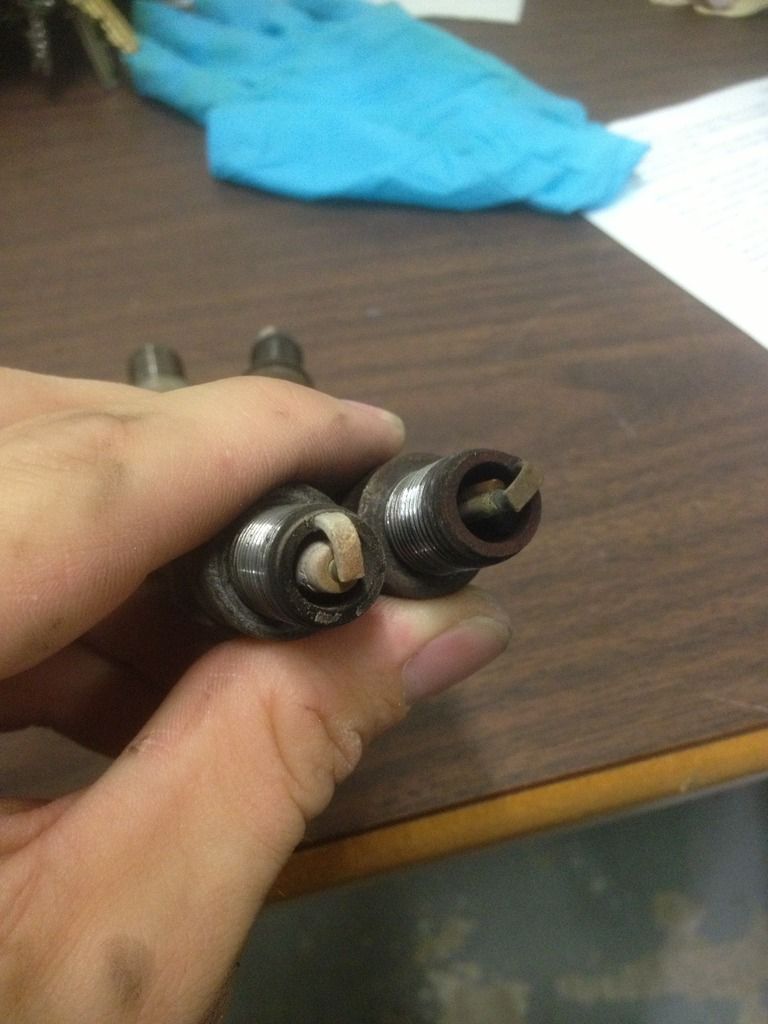
Sent from my SM-G920W8 using TapatalkLast edited by ryanprins13; 04-09-2017, 06:09 PM.Leave a comment:
-
It's my daily driver and I car pool with my dad. We live ~96 miles from our shops. When I drive by myself, I just stay in that area with my mom, but when he's with me, we make a round trip each day, 5-6 days/week. I need to replace my steering rack before I do an alignment I'll get a hydrometer and check the coolant once a month. I recommend ALWAYS using anti-sieze when putting spark plugs in aluminum heads. Good to know on the NGK regap, thanks. Btw, for the break-in procedure, guidelines vary between manufacturers. How harsh should I be on this engine? Half throttle, rev up to 4k, accelerate and decelerate frequently for about 500 miles?
Leave a comment:
-
There's plenty of good used B3 on this side of the Pacific. The later model ones (1995 - 2000) from Mazda 121 have 16V heads, approx 10hp more than the festiva/aspires. Cheap to buy, but would cost a fortune to ship over there!Originally posted by Rick the Quick View PostLast edited by reddragon; 04-09-2017, 12:39 PM.Leave a comment:
-
If your engine and management system are working correctly, plugs should be almost white on the insulator. We use NGK V-Power and check them annually. Typicly run them 50K.Originally posted by Sid_RallyX_82 View Post
They come with a .044" gap which we regap to .025" for the Festiva coil, .032" for coil pack engines and COP.Last edited by Dragonhealer; 04-09-2017, 11:33 AM.Leave a comment:
-
Synthetic oil is the way to go, just not for break-in. I once worked on a Honda 750 that spent it's life in coastal Florida. The spark plugs were rusted to the head so severely that I had one snap off in the head. It didn't strip, it cleanly snapped in half. Pulling plugs once or twice a year is cheap insurance. i like to use a little bit of anti-seize on the threads. I wish the previous owner of the B6ME did.Last edited by Rick the Quick; 04-08-2017, 11:02 AM.Leave a comment:
-
Oh, ok, i thought they worked ok. But dont use platinum plugs, my car didnt run great with them.Originally posted by FestYboy View Post
I guess your down to changing copper plugs 3 times a year.
Just dont forget to do it. I left mine too long once and had the porcelin fall off a plug and score up the cylinder wall bad.
Sent from my SM-G920W8 using TapatalkLeave a comment:
-
You don't want iridium plugs because the coil and ICM aren't designed for them. The change in resistance will cause premature failure.Leave a comment:


Leave a comment: