^ Yes, i've been following with interest, Ryan's post #31 has opened the correct can of worms!
All the calculations i've made regarding tyres have only been mildly useful.
Too much tyre slows you down, too heavy, too wide, too sticky? Just an observed fact. Not enough tyre wears out too fast, example: we put 145's on Ethel (B3 5speed stock suspension) everything fine, very efficient. Then we fitted Advanced suspension and wore them out in 9K miles using the same sporting driving style.
Best track results on the Mazda2 is 225/45-15 front @40psi hot and 205/55-14 rear at 45psi hot. The tyres are Nitto NT-01's, but its not that simple. If the tyres were fresh, this wouldn't work at all, way too much grip. The tyres are take offs that have dried/aged 2-3 years. The stager is so they heat up similarly, the pressure developed to give best results. All of this is by trial and error.
My rule: Give the car what IT wants to go fast, not what I/you want.
-
Yes, there are a lot of variables here. I have done a lot of back to back testing with many different race teams to determine tire width and compound, and at the end of the day, it's mostly a driver preference thing.Originally posted by ryanprins13 View Post
Maybe Ryal will chime in here. I've personally driven the cars for a few of his tire comparison tests. I know that there is a point where wider tires slow the car down. He uses a mazda2 for his testing, so that's pretty comparable to a Festiva.
You are also spot on with your comment about negative camber. I've found the sweet spot to be -3 to -3.5 degrees in the front and -4 to -5 (maybe more?) In the rear on 185mm tires. These cars work so much better with negative camber, and the tires last longer on the track.Last edited by Advancedynamix; 04-04-2017, 02:18 PM.Leave a comment:
-
Mike, your thread has sparked a great conversation. This is exciting stuff. You are right in stating that it's best to just go with what works for you.Originally posted by mikemounlio View Post
Nobody is arguing here, just a great topic and some solid theories and information being exchanged. We all benefit from more people testing with more cars on more tracks.Leave a comment:
-
Also, how is load transferred to the patch? Is it even? A lot of it comes down the sidewalls to the outside, how well does the air pressure inside the tire support the middle? Is there more pressure on the outsides and less in the middle?
Sent from my SM-G920W8 using TapatalkLeave a comment:
-
We would love to see your car! Youll be working on it so start a thread in the build section of the forum and add lotsa photos!Originally posted by RdstrBlk View Post
Lol, why? Thats how we get our power to the ground! Imagine a fwd motorbike... yould need weight in front of the front tire to keep it down so you can accelerate.
Thinking about this more i realize that i want to learn a lot more about it [emoji14]Originally posted by RdstrBlk View Post
My first question would be how would you get a 6x4 and 12x2 patch on the same car? In the second quote it says wider tires have a shorter contact patch but isnt that because they have less psi on the contact patch to deflect them?
I think (but i dont know) that you would have to get a much taller and narrow tire to accomplish that difference on the same car and that would change a ton of other things.
Can you tell me how that works if im not understanding this?
The way i see it any tire with the same sidewall hight, made out of the same materiel and having the same diameter will have the same length of contact patch if you exert the force required to have the same psi on the contact patch regardless of width.
The reason wider tires get a shorter patch is because there is less psi to deflect the tire right?
Also its not quite as simple as he says, this tire will have a different contact patch size than this one because of the tread pattern:


And all this is about why wider tires are better. What if 185's are wide tires for our car?
With the slip angle- thats different for different styles of suspension and its why we use negative camber. So to put it basically lets say we have a 165 tire with lots of negative camber and the majority of the weight is only on half the "contact patch" at rest. That gives optimal accelleration traction because 165 is too wide lets say and the pressure would be too low. So essentially you have 1 tire width on the ground when your going in a straight line.
Then you go to corner and that negative camber flattens out on the outside tire so its level lets say. All the weight from the inside tire transferrs to the outside one and you have the same contact patch psi as you did going in a straight line. You also have the same contact patch size on the ground.
Wider tires giving more responsive handling and feel has more than just contact patch at play. Wider tires basically always stick out farther because you cant go in. Its like outriggers on a crane. Much more stable. If you took the narrower tires and put them on rims that stuck them out as far as the wide ones or used wheel spacers you would gain much (but perhaps not all) of the same feel.
Also optimum contact patch pressure is different on the same tire depending on what temperature the tire is. As it warms up it gets grippier to a point. Once it overheats you loose traction.
So toonarrow of a tire can overheat easy if you drive it hard, but too wide a tire might never warm up enough to give you optimal traction. Thats another reason for using different tire widths on non-awd cars.
Sent from my SM-G920W8 using TapatalkLast edited by ryanprins13; 04-04-2017, 01:44 PM.Leave a comment:
-
The above statements are true if a vehicle never rolls and both size tires are inflated to the same pressure and have identical compositions and structures. If you plan to drive your car, that thoery may not be the answer for you. Also, wider street tires are constructed for heavier vehicles and therefor have a more rigid carcass. Our little 1800lb wonders of engineering don't weigh enough to effectively utilize the stiffer carcassed tire and this results in a lack of necessary deflection.
Wider tires do offer more lateral stability, when fitted on a properly sized wheel. They also hold up better during track driving. A 185mm tire will work better than a 165mm tire on a race track, when they have come up to temperature. With a stock b3 festiva, this may not be enough of a difference to overcome the added resistance and weight. I've driven a few b3 cars on a couple different tracks, and it's like driving one of those go karts at the fair where you never have to let off the throttle, lol. There is a lot more car there than engine. Even the b6d barely works the chassis. The b6t feels about right, but it's nothing wild or exciting (which I enjoy).
When I started using R compound tires on my b6t festiva, I started with 5.5" wide wheels with 185mm tires. I soon found out that the car needed wider wheels to support the sidewalls better. These cars place a tremendous load on the outside front tire when cornering at full tilt. I tried 6" wheels, but eventually found 7" to be the best combination. A 205 50 15 does make a great tire (with the right body mods to fit it) for a budget concious driver, as they hold up wayyyyy better than the 185/60-13 tires. That's why we run them on the front of our LeMons car. We can use that car for some back to back data on a Festiva. My findings have been a result of me taking the time to get out on the track with whatever I had available at the time. Since I never really intended on writing much about this stuff, we didn't record much of what we discovered. I just took a mental note and said, "buy another set of those" or "that didn't work". LolLast edited by Advancedynamix; 04-04-2017, 01:52 PM.Leave a comment:
-
OMG this topic is crazy. Try the tire you want and come to your own conclusion. I listen to what charlie says because he has lots of seat time in the car (the same kinda car). I will make my mind up as to what tire is best for me and my situation but i will start off with what he has suggested or i will get as close as i can to that.
Sometimes at the end of the day it all comes down to what works best! the math does not always paint a perfect picture.Leave a comment:
-
Ahh... just to throw another wrench in the gears!!
Taken from an autocross forum.
EDIT:I imagine it has something to do with the shape of the patch, too. Given the same psi, the contact patch is going to be the exact same # of square inches regardless of the dimension of the tire, but the shape will be different for wider tires. 30 psi supporting 1/4 of a 2900lb car is 24 square inches per tire, regardless of what wheel/tire combo you're using. It's very simple physics. Which could be a 6x4" patch on a 6" wide tire, or a 12x2" patch on a 12" performance tire. My physics textbook would say both of these give the exact same friction, but there's obviously something fancier involved, as the 12" tires are well known to give much more responsive handling and stability in the corner than 6" tires. Is it that the wider tires are closer to cylindrical, and don't have to deform as much, allowing them to be stiffer with less flex, and better able to transfer those forces to the ground?
Adding another quote
Just a little bit of backup for my claims / skepticism. I'm still legitimately interested in testing my experiment between tires, so I think I'll still give it a shot.Probably the best, short explanation is from Paul Haney's book "Racing & High Performance Tire" (available on-line at his website for $55 shipped.
"For the same vertical load and internal pressure, a tire with a wider tread has a shorter, wider contact patch than a narrower tire. The area of both contact patches is the same if the internal pressure and the load are the same. . . A shorter contact patch at the same slip angle begins to slip at roughly the same distance from the leading edge as with a long contact patch. But the shorter contact patch has more of its length stuck to the road than the longer, narrower contact patch; and therefore a larger portion of its overall area is gripping." - Why Wider Tires Are Better, p. 101
Paul's book is excellent, although it requires more serious study than most would like to give. I highly recommend it! :Checkers:Last edited by RdstrBlk; 04-04-2017, 12:07 PM.Leave a comment:
-
Awesome! Was waiting for you to chime in! Okay I'm genuinely curious so I'll get some tires mounted on my 13x6 aero wheels and compare track times and g sensor data to the 15x8 wheels. I should know what to expect based on this thread, but I am still genuinely curious.
I love the deltawing, and the groundbreaking theory behind it. I know we are throwing around a lot of well defined info, but some of this is purely speculatory as we are trying to redefine the festiva. You have written the bible so far, but it isn't complete and I'm sure you would agree.
Just looking for data points as proof of theory. I'll do my testing with the stock b3 and my setup, and can give actual data based around that. Eventually I'd like to swap in a BP as it is the same motor I have been standalone tuning for 3 years, am getting 145whp on 93 pump gas. At that point I can give data from that power point.
I've never ridden in a boosted festiva, and I'm new to the car and crowd as well as fwd in general. So.. I have a lot to learn, and unlearn! Always up for a good debate, and love entertaining new concepts ans ideas. I think as a community we are right on track. I'd love to send you some photos of my suspension setup to get your thoughts. A friend of mine who also makes custom racing suspension setups looked disgusted at the amount of weight in front of the front axle. A national level competitor as yourself. The counterintuitive aspects of this car are what fuel my love for it!Leave a comment:
-
I run 100 tread wear tires on my grocery getter. It's very very common to see R compound rubber on street cars in my area.Originally posted by RdstrBlk View Post
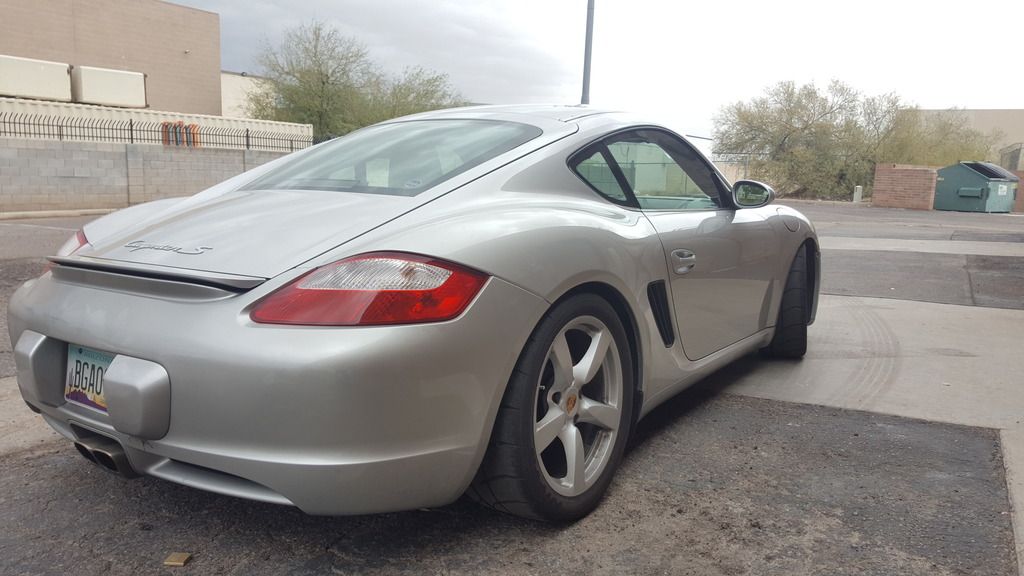
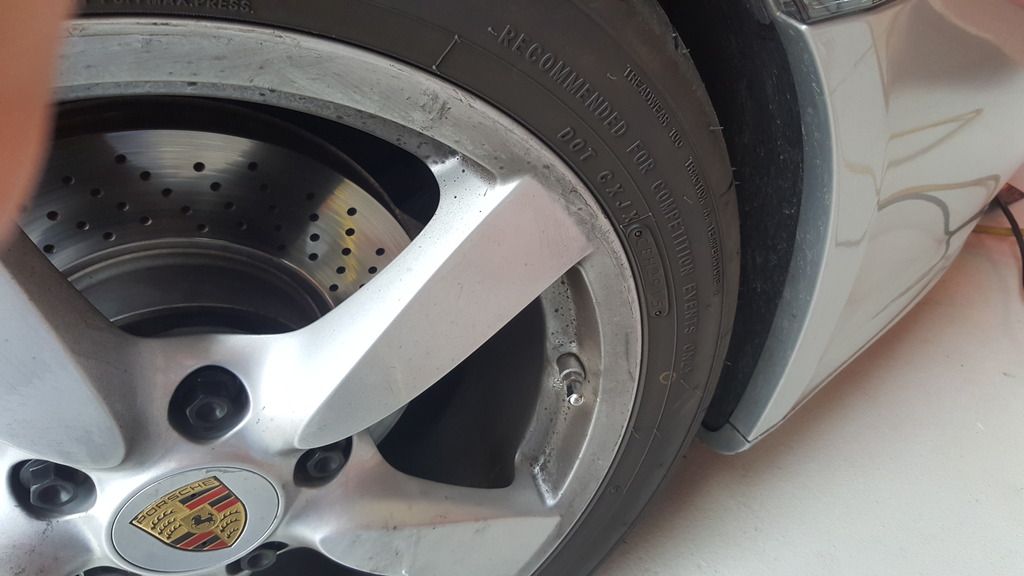
These tires are actually a good bit cheaper than the Pilot super sports that came on this thing. I chew through Michelins like the value menu at Taco Bell.
Funny thing is though, Pedro sticks better on 165mm Chinese bargain rubber than my Cayman on NT01s.
If you could come up with a tire material to withstand a 1" wide tires, you'd be very surprised at how well it grips.Originally posted by RdstrBlk View Post
Your also correct with your assumption of different tire widths being optimal for the different ends of the vehicle, but that's nothing new or ground breaking. If you had an AWD vehicle with 50/50 weight distribution then it would be optimal to have the same width tire on all 4 corners, otherwise it's best to have the proper width for the load the tire will experience during its intended use. We stagger tires on our LeMons race car for longevity and traction reasons.
How many boosted Festivas have you driven on 165mm tires?Originally posted by RdstrBlk View Post
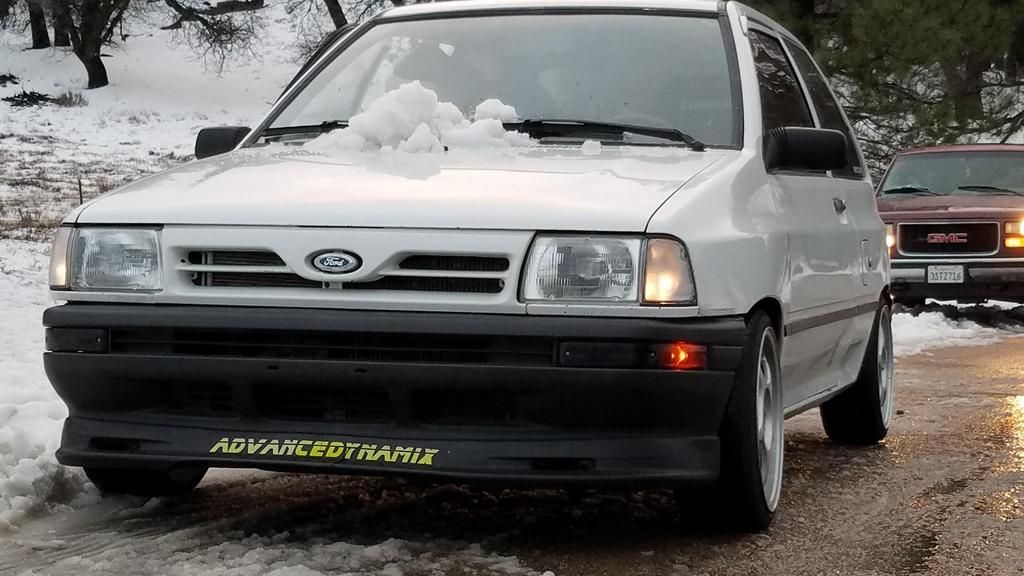
This was sent to me by the current owner of my last turbo festiva a few months ago. He and his wife took the car on a vacation up into the mountains to play in the snow. He and his wife regularly drive the car in the rain. At 180ft.lbs to the wheels, the 165mm tires grip way better than the 185mm tires he used to run on his B3 car (until he drove Tweak for the first time and switched to 165mm).
If that's not hard evidence, nothing is.
My b6d swapped car pulls pretty hard (all who have driven or ridden in it compare it to a healthy BP swapped festiva) yet it hooks up great with the 165/55-14 Achilles tires that I run on it. I've tracked it a bunch of times on these tires too, as well as driven through Hurricane Joaquin and even a snow storm. I've got a very healthy collection of wheels and tires, but I prefer 165mm tires for street and light track work, regardless of HP.
For heavy track work, I use wider tires. However, the compound of the tire needs to be appropriate to the width. From my own personal experience, 185mm is the best width for traction in a tire from 80 to 200 tread wear on the Festivas that I've track driven. I've run 8" wide Hoosier R35A tires and my lap times were a couple seconds slower than the 185/60-13 A048r tires that are now my go to.Leave a comment:
-
Post number 12 and 13 in here we talked about contact patch pressure, i dont know what the optimal psi is but it would be like a bell curve. With optimal contact patch pressure giving you the highest traction and less pressure/more pressure gives you less traction most likely on a curve.Originally posted by RdstrBlk View Post
145's are too skinny but they are usually hard rubber and tall sidewall. Mine are 600 treadware rating, lol. I think a sticky set of 145's on 14in rims on the rear would be interesting to experiment with.
And yes, the treadware rating is useless as a comparison tool across brands.
With rear wheel drive, even well balanced ones like a miata you still get a lot of weight transfer. The more power you make the more weight gets transferred to the rear wheels' contact patch and the more power you make the faster you accelerate and force=massXacceleration.
So the more power you make the wider your tires need to be to keep your contact patch pressure from getting too high.
With fwd, stock everything, when you accelerate you transfer a bit of weight off the front tires. Moving the engine foreward transferrs the engine and trans weight to the front tires making a huge improvement but the load of the firewall, dash and driver transferrs off the front to the rear tires.
So you want narrower tires on a fwd car than a rwd car of the same weight and power.
Rears of our cars should probably use narrower tires than the fronts for optimal traction but having 4 of the same is much easier and there arent much options for quality tires narrower than 165
Sent from my SM-G920W8 using TapatalkLeave a comment:
-
Please understand that tread wear numbers are specific to the manufacturer, so a 200 for one might equal a 400 or 450 for another. That would explain the disparity you've experienced.Leave a comment:
-
I want the federals to work due to the size/treadwear/price. If they are half as good as they look they will be my tire of choice. Not much out there for us to pick from.Leave a comment:
-
Still just comparing tire sizes, not compounds. That's another debate entirely. And r compounds are too expensive for street use (and hell even for uncompetitive track use), so we can assume 200-400 treadwear (although a huge diff still). I do understand that 20" wide tires would (if it could spin the thing) provide little traction because of little weight per area of tire. But on the flipside, 1" bike tires aint gonna have much grip even with all of that weight. Yes, contact patch is the critical factor we have identified. I'm still going to need some convincing or some data that shows the optimal tire size for the weight of the car and available power. I come from a fairly balanced roadster, so equal tire sizes and widths makes sense. Maybe with our front heavy hatches, the gains of having matched tires are lost?
But just comparing the weight over each axle of the miata, and compare it to the front axle weight of the festiva, i would say 145s are gonna spin like mad. I think a lot of this debate does boil down to tire availability, as well as consistency between brands. I've driven 200 wear rate that gripped less than 340 wear rate. I still think 165 is way too narrow, especially for the boosted folks around here. I thought the tires I put on would be too much tire, not enough tossability, but I was wrong. The tires are absolute shit. 340 wear rating chinese brand. Compared to the 140 wear rating sumitomos they feel slippery, but by removing the tire flex I'm getting a more responsive turn in, and the 2" increase in rim width also helped bring the tire to its full potential. There is a balance between tire meat and tire stretch.
Again... sorry for threadjacking.
I'm excited to hear your impressions of the federal tires, they are good for their cost IMOLeave a comment:


Leave a comment: